Roboto Agents: Accelerate the Learning Loop for Physical AI
Robotics teams generate more data than they can analyze. Agents put it to work, turning every robot run into a faster learning loop.

Today, we are introducing Roboto Agents: AI that automates the data workflows behind Physical AI and helps robotics teams accelerate their learning loop.
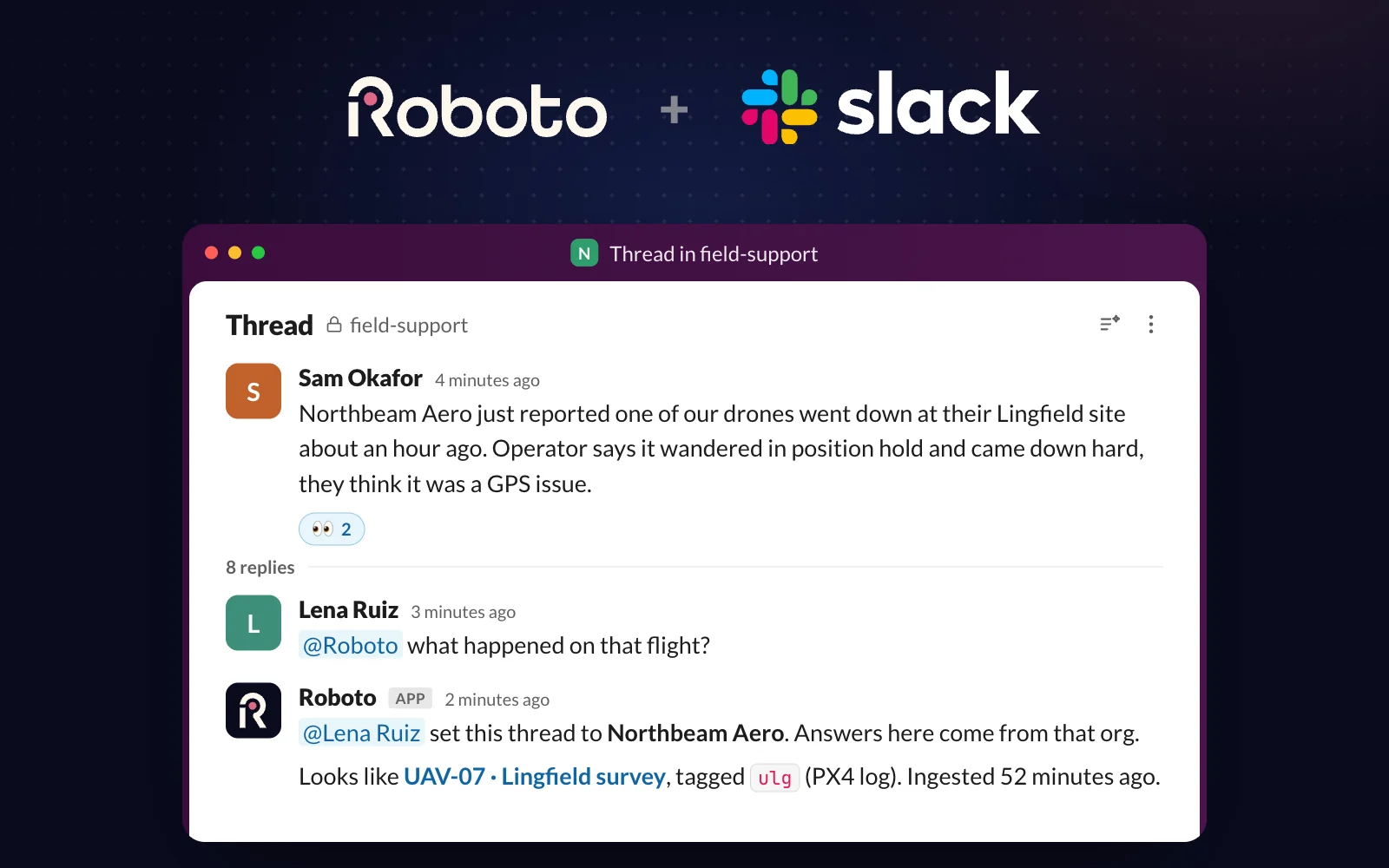
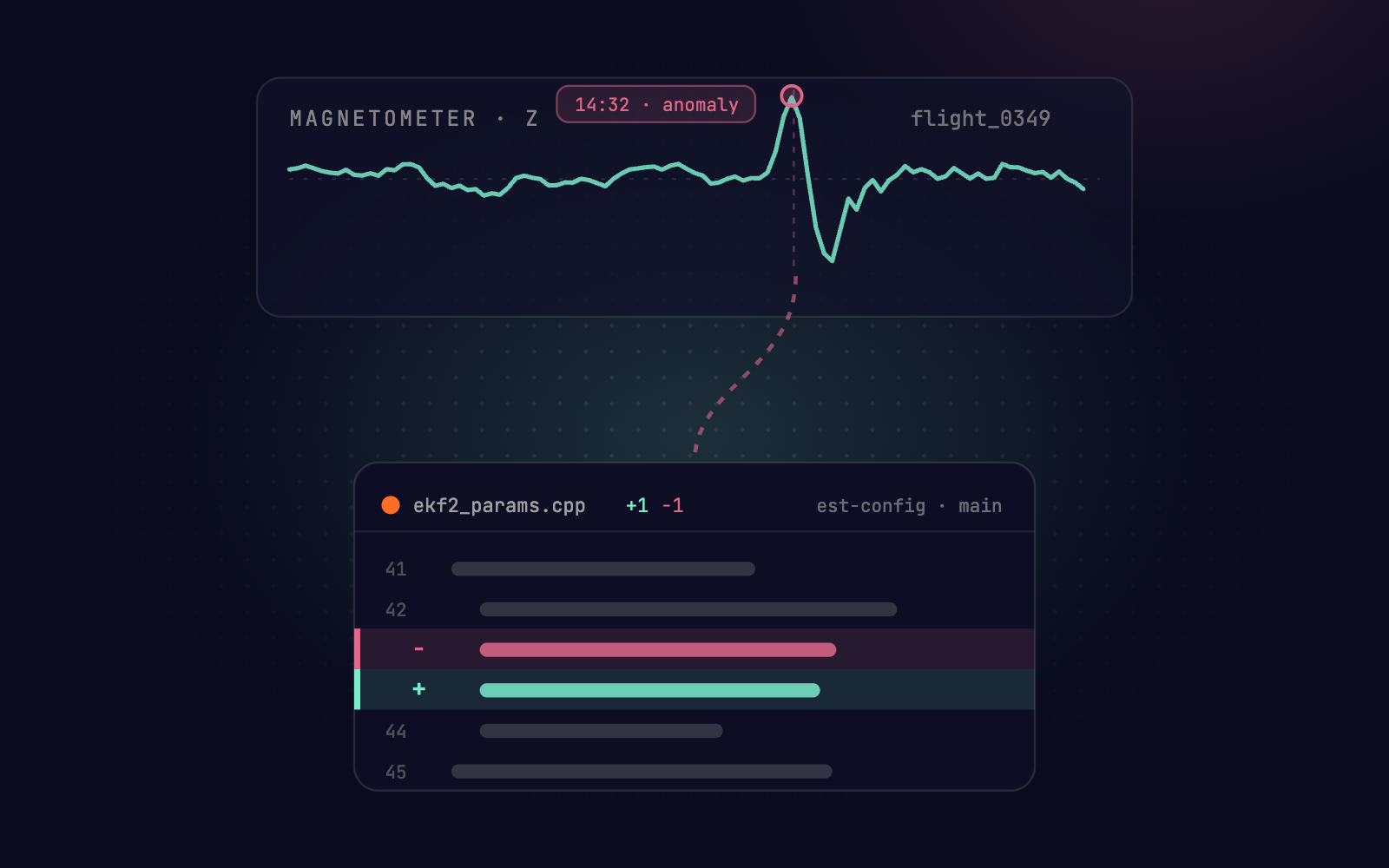
Instead of manually analyzing robot data one run at a time, describe what you want to accomplish. Agents review logs, investigate failures, find patterns across your fleet, and curate the events that matter most.
Want that on your own logs? Book a demo and we’ll run Roboto Agents on one of your robot’s runs.
Why robots need a learning loop
The potential of Physical AI is enormous.
Robots are moving from controlled environments into the real world: operating alongside people, navigating unstructured environments, and taking on increasingly complex tasks.
But building reliable robots remains hard.
A missed grasp, a failed inspection, a drone crash, an unexpected stop: every failure is the result of a complex interaction between hardware, sensors, software, and models. And while the industry is moving quickly, reliability has not caught up with the ambition.
Behind every impressive demo is the harder reality of deploying, operating, and maintaining robots in the real world, where downtime, edge cases, and unexpected failures remain a daily challenge.
Turning a demo into a scalable product requires one thing: a learning loop.
The companies that have scaled autonomous systems spent years building that loop. They collected massive amounts of operational data, investigated failures, improved their systems, and repeated the process thousands of times. But most robotics teams don’t have the time or resources to build that capability from scratch.
They need a way to learn faster.
That starts with the data every robot already generates.
The Physical AI data paradox
Robotics companies today face a data paradox: they need more diverse data to improve their models, yet they already generate more operational data than their teams can manually analyze. Every robot run produces gigabytes of sensor streams, telemetry, images, video, state estimates, controller outputs, and more.
Visualizers and replay tools like RViz were built for humans investigating one robot, one run at a time. They remain helpful for expert review, but they do not scale as fleets grow and every deployment generates more data.
As a result, engineers still spend hours pulling logs, replaying runs, searching through past incidents, and trying to reconstruct what happened. The answers may already exist somewhere, but finding them is often harder than the investigation itself.
But debugging is only one use case. The same operational history that explains why a robot failed today also becomes the foundation for improving tomorrow’s systems.
What robotics teams need is a way to review, understand, and learn from every robot run, not just the small fraction that humans have time to investigate. Until recently, that wasn’t possible.
Why agents change robotics data workflows
When we started Roboto in 2022, we believed robotics would need a new approach to data analysis. We had seen this firsthand at Amazon Robotics, where scaling a fleet meant solving a very different problem from building a robot that worked once. Every deployed system generated more data, more edge cases, and more opportunities to improve, but turning that data into reliability required the right infrastructure.
At the time, generative AI was just beginning to emerge, and much of the industry was focused on building new types of robots and debugging them with visualizers, not on building the data infrastructure required to make them reliable at scale.
Since then, we have been building that foundation: ingesting complex multimodal robotics data, indexing it, making it searchable, and giving engineers the tools to understand what happened across historical datasets.
Agents are the next step: an interface that finally lets engineers put that data infrastructure to work. For the first time, robotics teams can have the virtual eyes to analyze every robot run.
We first demonstrated an agent debugging a robot log at ROSCon in October 2025 and later a drone flight at PX4 Dev Summit in November 2025. At the time, many people were excited about the potential, but there was still understandable skepticism about whether agents could do meaningful work with robotics data.
The technology has moved quickly. Agents are no longer just a concept or a demo.
Earlier this year, we gave select customers early access to Roboto AI Chat, a conversational interface for working with robotics data. It proved something we had long believed: when robotics data is properly structured, indexed, and searchable, AI can do meaningful robotics engineering work.
Roboto Agents builds on that foundation, making it possible to automate investigations and data workflows that previously required hours of manual analysis.
From workflows you code to workflows you describe
Roboto has always supported automation through Actions: deterministic, containerized functions that let engineers encode repeatable data processing tasks.
Agents complement that approach.
While an Action runs code you write, an Agent applies AI reasoning guided by natural-language instructions. Reach for an Action when the workflow is easier to code. Reach for an Agent when the task is easier to describe.
That distinction is what makes requests like these possible:
- Find all robots showing this failure pattern.
- Have we seen this anomaly before?
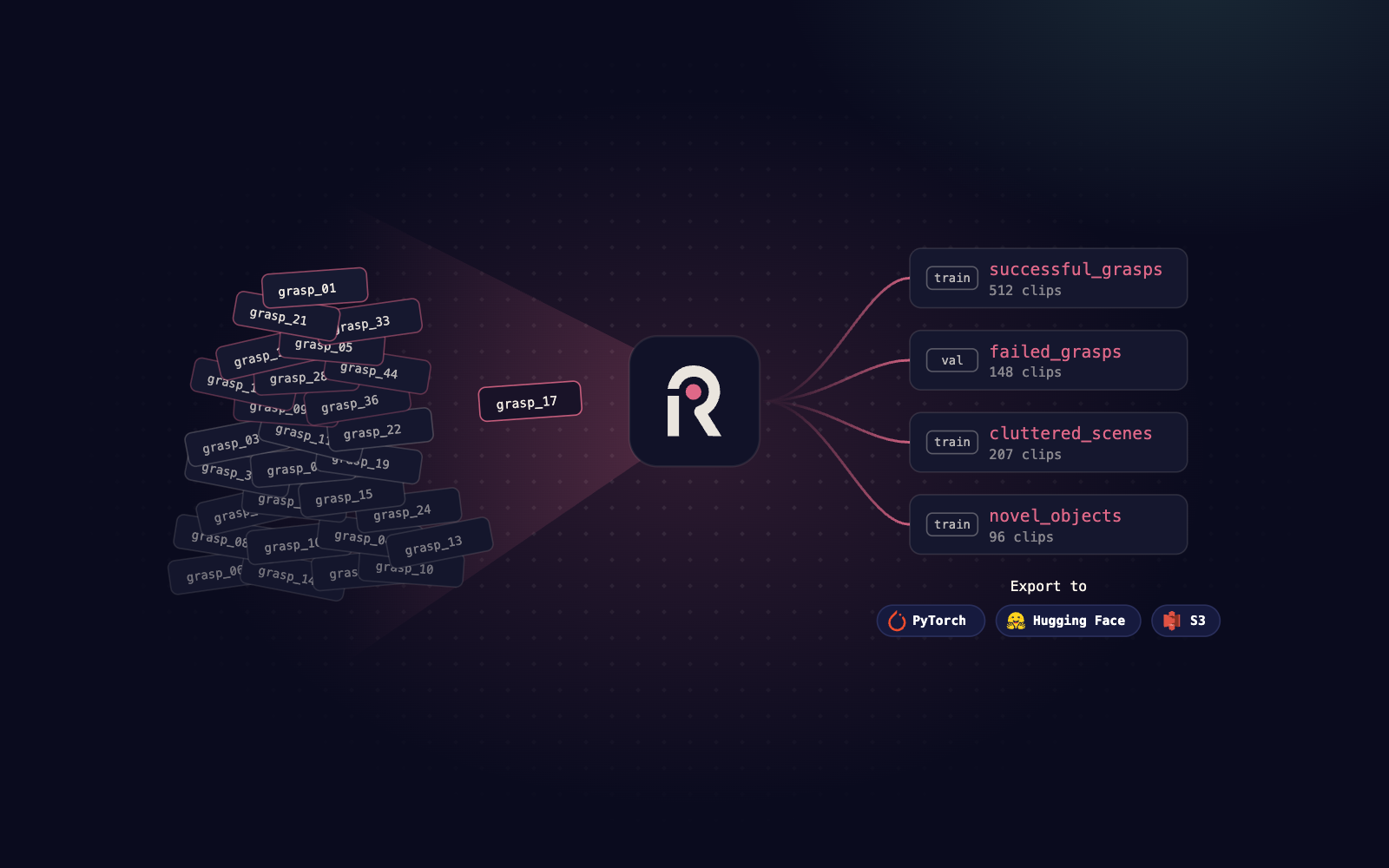
- Create a collection of events where this behavior occurred.
- Investigate why this vehicle stopped during takeoff.
These are not hypothetical workflows. Teams at BRINC, ANYbotics, and others run them on Roboto today.
Roboto is invaluable for debugging challenging flight issues. Before, it could take hours or even days to root-cause a complex flight failure. Now, with Roboto’s AI chat and agents, along with the ability to provide BRINC-specific context and code, we’re identifying and solving edge cases in minutes. These features have also enabled employees less familiar with all of our systems to quickly diagnose problems.
The next phase of Physical AI
Physical AI will not be built on models alone. It will be built on the ability to learn continuously from every robot, every run, and every failure.
The future of Physical AI depends on faster learning loops. Roboto Agents are how we help robotics teams build them.
Over the rest of the week, we’ll show how those agents take on triage, root cause analysis, data curation, and more. Follow along at Agent Week.
Want to see it on your data? Book a demo and we’ll put Roboto Agents to work on one of your own robot’s runs.